Getting Unstuck: Context Readiness
Before you can build effective AI workflows, you need to get your context ready. Most research offices jump straight to tools and wonder why nothing sticks. The real challenge is not the technology. It's that the foundation isn't in place.
Here are four common barriers I see again and again, along with practical strategies for clearing each one.
1. Fragmented Data and System Silos

The data you need is not located in a single system. It's siloed across platforms and not readily accessible across the university. Some of it lives in people's heads, in email threads, or buried in personal folders. Other data requires deep knowledge of university platforms, which change over time. And often, the data you need most is locked behind permission structures that make workflow development difficult.
What to do: Start by mapping where your critical information actually lives. You don't need to fix every silo. Just document what exists and where, so you know what you're working with when you design a workflow.
2. Absence of Formal AI Governance
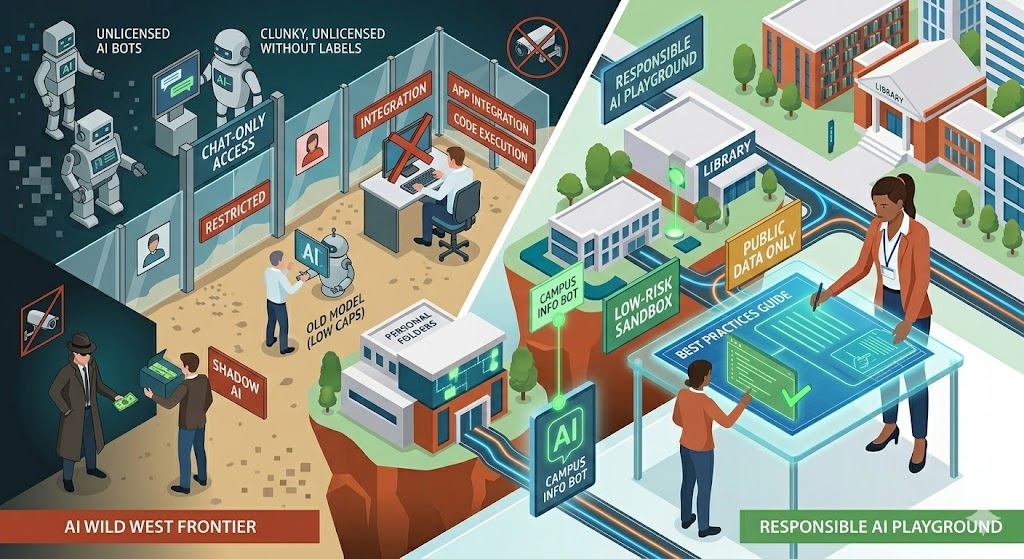
Nearly all universities currently lack a clear AI usage policy, creating a "wild west" environment. Institutions may not have purchased usable model licenses. The tools that are available often come with arbitrary limitations: chat-only access with no app integration, restrictive file upload caps, or platforms running on older models without reasoning capabilities or useful tools like code execution.
The result? Anyone who wants to do meaningful work with AI is either stuck with limited free versions or paying out of pocket for "shadow AI" that IT doesn't know about.
What to do: Don't wait for perfect policy. Learn what you can use responsibly within current constraints. Focus on low-risk use cases with public or non-sensitive data while governance catches up. And document your practices so you're ready when formal policies arrive.
3. Undocumented Processes and Tribal Knowledge
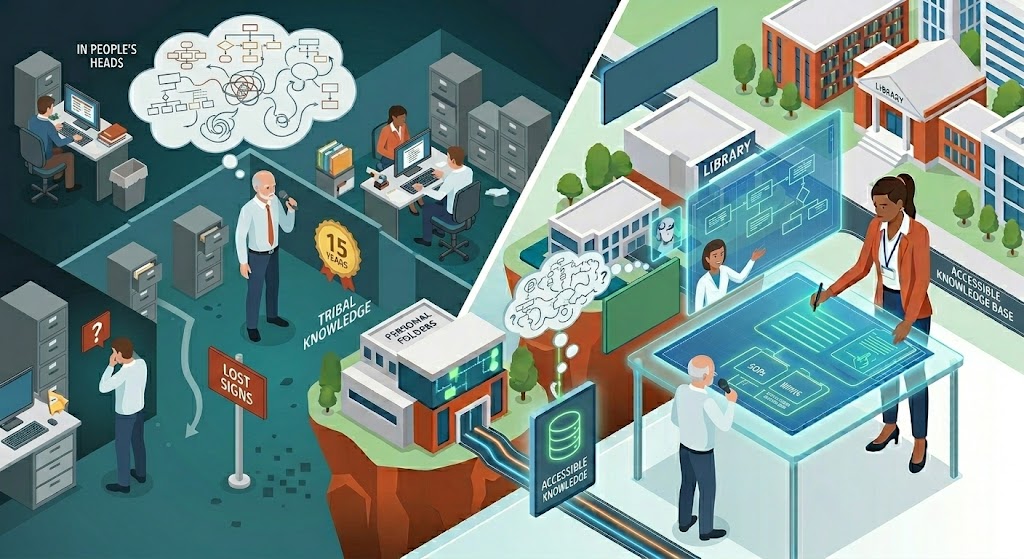
Core processes live in employees' heads. The person who's been doing something for fifteen years knows all the edge cases, exceptions, and workarounds, but none of it is written down. This makes it nearly impossible to transform institutional knowledge into workflows, SOPs, wikis, or anything an AI system could learn from.
What to do: Start capturing context now, even imperfectly. Record yourself explaining a process. Interview the person who knows how something really works. AI can help you clean up and structure this information later, but first you need to get it out of people's heads and into a form you can work with.
4. Uneven Skills and Cultural Hurdles

AI literacy varies widely across any team. Many staff are caught in the "too busy to improve" paradox: they lack the bandwidth to learn new tools precisely because they're drowning in the manual work those tools could reduce.
Then there's the cultural resistance. Some colleagues, often supervisors or faculty, believe that using AI is lazy or that all AI output is inherently questionable. This skepticism can shut down experimentation before it starts.
What to do: Lead with small, visible wins. Don't evangelize. Show, don't tell. Find one workflow where AI saves real time, document it, and let the results speak. Resistance fades when people see concrete value delivered by someone they trust.
Once You've Cleared the Path
Getting your context ready is the prerequisite. Once you've started tackling these barriers, you're ready to build actual workflows using the 3D Framework: Define, Develop, Deploy.